Skip to content
Welcome To Our Store.
100,000+ Products for Home, Medical, Office & Classroom Needs
Search
Skip to product information
1 of 1

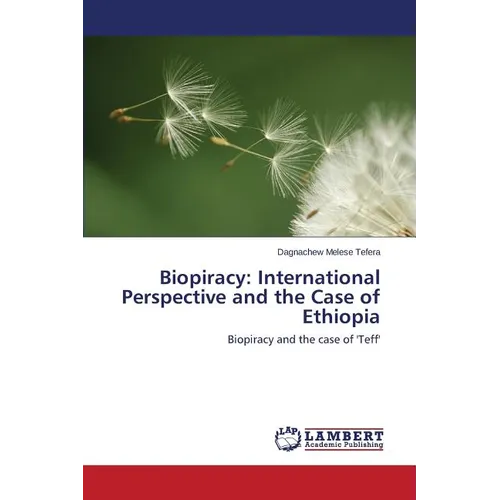
Biopiracy: International Perspective and the Case of Ethiopia - Paperback

$96.26
$96.26
Sale Sold out
Shipping calculated at checkout.
In stock (100 units), ready to be shipped

Available Offers

Fastest Delivery Tomorrow With Vip DealOrder within 1 hr 8 mins.

Instant 10% Discount On HDFC Banks Credit/Debit Cards EMI and CreditCard

Secure checkout with
  • American Express
  • Apple Pay
  • Diners Club
  • Discover
  • Google Pay
  • Mastercard
  • PayPal
  • Shop Pay
  • Visa

Flight Range: Up to 1,000 meters (3,280 feet)

Maximum Speed: 45 kilometers per hour (28 miles per hour)

For all orders exceeding a value of 100USD shipping is offered for free.

Returns will be accepted for up to 10 days of Customer’s receipt or tracking number on unworn items. You, as a Customer, are obliged to inform us via email before you return the item.

Otherwise, standard shipping charges apply. Check out our delivery Terms & Conditions for more details.

View Product Details
Shopping cart
Product Product subtotal Quantity Price Product subtotal
Biopiracy: International Perspective and the Case of Ethiopia - Paperback
$96.26/ea
$0.00
$96.26/ea $0.00

Product Description

by Tefera Dagnachew Melese (Author)

All living organisms; plants, animals and microbes, carry genetic material that could be potentially useful to humans. Hence, the issue of ownership over genetic resources and related traditional knowledge has become one of the most controversial worldwide agendas. Big pharmaceuticals and the global north argue that genetic resources are common heritages of mankind; hence there should be no restriction of ownership. The global south, however, argue for the recognition of the sovereign right and ownership of states over their genetic resources, hence without their permission no one can either access or own their resources. Mainly until 1990's and even currently, there have been acts of accessing and owning the genetic resources and related traditional knowledge without the consent and/or permission of the owning state of the resource and a subsequent acquisition of patent right for the innovations made. It is this act of plunder of genetic resources that is depicted as an act of Biopiracy. Ethiopia, one of the bio-diverse nations, is also a victim. This work calls for an internationally binding instrument to curb the problem.

Number of Pages: 152
Dimensions: 0.35 x 9 x 6 IN
Publication Date: December 15, 2014
you might like