


Product Description
by Kristina M. Gill (Editor), Mikael Fauvelle (Editor), Jon M. Earlandson (Editor)
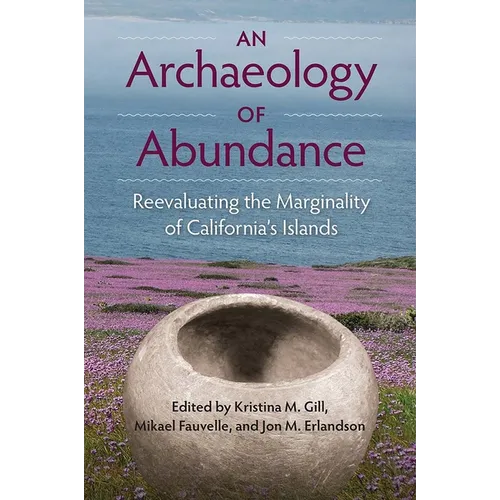
The islands of Alta and Baja California changed dramatically in the centuries after Spanish colonists arrived. Native populations were decimated by disease, and their lives were altered through forced assimilation and the cessation of traditional foraging practices. Overgrazing, overfishing, and the introduction of nonnative species depleted natural resources severely. Most scientists have assumed the islands were also relatively marginal for human habitation before European contact, but An Archaeology of Abundance reassesses this long-held belief, analyzing new lines of evidence suggesting that the California islands were rich in resources important to human populations. Contributors examine data from Paleocoastal to historic times that suggest the islands were optimal habitats that provided a variety of foods, fresh water, minerals, and fuels for the people living there. Botanical remains from these sites, together with the modern resurgence of plant communities after the removal of livestock, challenge theories that plant foods had to be imported for survival. Geoarchaeological surveys show that the islands had a variety of materials for making stone tools, and zooarchaeological data show that marine resources were abundant and that the translocation of plants and animals from the mainland further enhanced an already rich resource base. Studies of extensive exchange, underwater forests of edible seaweeds, and high island population densities also support the case for abundance on the islands. Concluding that the California islands were not marginal environments for early humans, the discoveries presented in this volume hold significant implications for reassessing the ancient history of islands around the world that have undergone similar ecological transformations. Contributors: Amira F. Ainis Linda Bentz Todd J. Braje Paul Collins Jon M. Erlandson Mikael Fauvelle Scott M. Fitzpatrick Kristina M. Gill Michael A. Glassow Michael H. Graham Amy E. Gusick Courtney A. Hofman Kristin M. Hoppa John R. Johnson Dustin Merrick Ken Niessen Jennifer E. Perry Leslie A. Reeder-Myers Torben C. Rick René L. Vellanoweth Andrew Yatsko A volume in the series Society and Ecology in Island and Coastal Archaeology, edited by Victor D. Thompson
Author Biography
Kristina M. Gill is an archaeologist and archaeobotanist with the Museum of Natural and Cultural History at the University of Oregon and research associate at the Santa Barbara Botanic Garden. Mikael Fauvelle is a doctoral candidate in anthropology at the University of California, San Diego. Jon M. Erlandson is professor emeritus of anthropology and director of the Museum of Natural and Cultural History at the University of Oregon.



